


Minneapolis has the largest Somali community in the United States – an estimated 70,000-80,000 Somali Americans call the Twin Cities home, most of them in Minneapolis. The cultural and culinary life that comes with that community is rich, vibrant, and largely invisible to people who don’t know where to look.
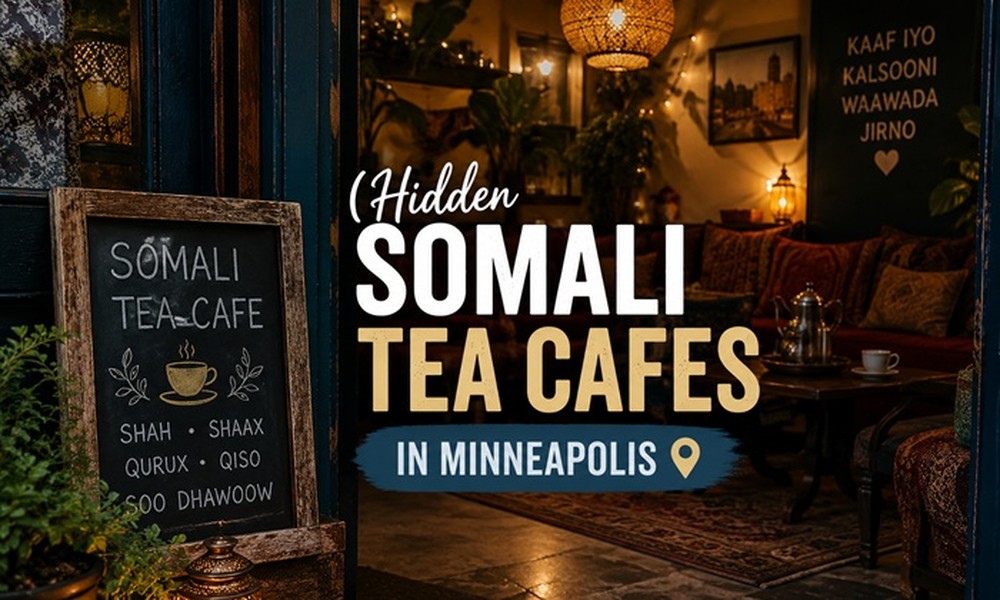
Somali tea cafés – small, usually unmarked or minimally signed spots where locals gather for qaxwo (spiced tea), conversation, and community – are among the most rewarding food experiences in the city. They’re not tourist destinations. Most don’t have Instagram pages. And the tea, for those who’ve never had it, is extraordinary.
What is Somali Tea?
Somali tea (qaxwo) is unlike anything you’ll find at a typical American café. The base is black tea, brewed strong and long, then spiced with cardamom, cinnamon, cloves, and sometimes ginger. It’s served with milk and sugar, often very sweet, in small glasses or cups.
Some cafés also serve:
- Shaah with malawah: tea served with malawah, a sweet, flaky Somali pancake – one of the great breakfast combinations in the city
- Bun (Somali coffee): similar spice profile to the tea, sometimes with a cardamom-forward coffee base
- Xalwo: a sweet, gelatinous Somali dessert made with sugar, ghee, and cornstarch – occasionally available alongside tea
- Sambusa: fried pastry filled with seasoned meat or lentils
Where to Look in Minneapolis
The Cedar-Riverside Neighborhood (Little Mogadishu)
Cedar-Riverside, along and around Riverside Avenue near the West Bank campus of the University of Minnesota, is the heart of Minneapolis’s Somali community and the most concentrated area for Somali businesses including cafés.
The strip of businesses on Riverside Avenue includes restaurants, grocery stores, clothing shops, and small tea cafés that operate throughout the day. Many open as early as 6am and serve as morning gathering points for the community.
Look for: small storefronts with minimal English signage, often with chairs and tables visible through the window, frequently playing Somali news or music. The scent of cardamom is a reliable indicator.
Elsewhere in the City
Somali businesses have expanded beyond Cedar-Riverside into neighboring areas, including:
- South Minneapolis around Lake Street – several Somali grocery stores and small cafés have opened here
- Burnsville and Bloomington in the southern suburbs have growing Somali populations and community cafés
- Brooklyn Park in the northern suburbs has a significant Somali community with its own café culture
The Experience of a Somali Tea Café
These spaces function differently from American cafés. They’re social institutions – places where men and women (often in separate sections in traditional spaces, though this varies) gather for extended conversation, community news, and prayer scheduling. Expect a warm welcome but also an awareness that you’re entering a community space, not a tourist attraction.
Tips for visiting respectfully:
- Order something – tea and malawah is the natural choice
- Be comfortable with a relaxed, unhurried pace; these are not places designed for 20-minute coffee stops
- Dress modestly (covered shoulders recommended)
- If there are separate seating areas, follow the social cues around you
- A few words in Somali go a long way – “mahadsanid” (thank you) is always appreciated
What You’ll Pay
Somali tea cafés in Minneapolis are extraordinarily affordable. A cup of qaxwo typically costs $1-2; malawah $1-3; a full small meal of rice and stew may run $8-12. It’s some of the best value food in the city.
Pro Tips
- Visit on a Friday or Saturday morning when cafés are busiest and most likely to have full menus including malawah and xalwo
- Somali grocery stores adjacent to cafés often sell tea spice mixes you can take home
- The Cedar-Riverside area is safe and well-trafficked – don’t let unfamiliarity deter you
- Some cafés have varying hours; if one is closed, another is likely open nearby
Common Mistakes to Avoid
Going without any Somali cultural context and expecting a typical café experience will lead to disorientation. Read a little about Somali culture beforehand – it enriches the experience significantly.
Expecting to find these places on Yelp with hundreds of reviews is unrealistic. Word of mouth, Google Maps, and community social media pages are more reliable.
FAQs
Q: What is qaxwo?
A: Qaxwo is Somali spiced tea – strong black tea brewed with cardamom, cinnamon, cloves, and ginger, served with milk and sugar.
Q: Is the Cedar-Riverside neighborhood safe to visit?
A: Yes – it’s a busy, active commercial and residential neighborhood with a strong community presence.
Q: What should I order at a Somali café?
A: Start with qaxwo (Somali tea) and malawah (sweet flaky pancake). Add sambusa if available.
Q: What is the best time to visit Somali cafés in Minneapolis?
A: Morning, particularly Friday and Saturday, when they’re most active and have the fullest menu selection.
Conclusion
Minneapolis’s Somali tea cafés are one of the city’s genuine hidden food experiences – inexpensive, welcoming when approached respectfully, and offering something you genuinely cannot find anywhere else in the Midwest. The tea is worth the trip alone. Go to Cedar-Riverside on a Saturday morning, follow the smell of cardamom, order the qaxwo and malawah, and stay as long as you’re comfortable. You’ll understand immediately why these spaces are so central to their community.
